
Large loss public adjuster marketing is a different discipline from the storm-season volume game most of this industry runs, and the firms that understand the difference are quietly building the most valuable books of business in public adjusting. Hail volume is roofer work: small files, compressed fees, and a fight with every chase truck in the county. Large losses are the real opportunity: high value home fires, commercial property damage, construction project setbacks, and the business interruption claims that follow them. This guide covers how those claims are actually won, and why trust, structure, and proof decide who gets the call when the loss is measured in seven figures.
Large Loss Public Adjuster Marketing: Key Points
- Hail and wind volume is roofer territory. The real public adjusting opportunity is fires, commercial property, construction setbacks, and business interruption.
- Large loss claims come from general contractor relationships, from digital authority, and from meeting property owners in the moment the settlement offer falls short.
- Nobody hands a seven figure claim to a stranger. Your site must show how you get paid, exactly what you do for the client, and make both quickly digestible.
- Then video success stories have to prove it: real clients explaining that you did everything your site promised. Words claim; video convinces.
- Most public adjusting sites have no real trust factor, which means the firm that builds one properly owns the category.
Hail Volume Is Roofer Work. Large Losses Are the Real Opportunity
Start with the positioning decision, because everything else in your marketing follows from it. Chasing hail season means competing with roofers and storm chasers for small files where your fee compresses and your expertise barely matters. That is a volume business, and it belongs to the trucks.
Large losses are where a public adjuster's skill actually changes the outcome. A high value home destroyed by fire. A commercial building with structural damage and months of lost revenue behind it. A construction project flooded or burned mid-build, with a builder's risk policy nobody on site fully understands and a completion deadline burning money every day. These claims are complex, urgent, and worth fighting for, which means they reward the firm positioned as the expert, pay fees that justify your time, and produce the settlement stories that become your next round of marketing. Every recommendation in this article serves one goal: making your firm the obvious choice when one of these losses happens. And the large loss book has two quiet wings most firms never build for: the year-round six figure files covered in our guide to water damage claims marketing, and the recurring building work explained in condo association insurance claims.
Where Large Loss Claims Actually Come From
Large loss claims arrive through a handful of channels, and the firms that win consistently work all of them at once. Knowing general contractors matters: GCs stand next to construction damage the day it happens, and a contractor who trusts you is a referral source that never stops producing. Referral networks among high net worth owners and commercial property managers work the same way.
But digital marketing is crucial, and it is the channel this industry undervalues most. The GC who wants to refer you will Google you first. The commercial owner told about you by a business partner will read your site before calling. And a large share of these claims come from meeting people in the moment: the owner whose insurance settlement is not enough to rebuild, typing that exact problem into Google or ChatGPT at midnight. If your firm owns that moment with real authority, you win claims no referral network would ever have handed you. We broke down every acquisition channel in our guide on how public adjusters get clients, and the large loss channels all share one requirement: the trust has to already be built before the prospect arrives.
If Your Website Has Never Signed a Large Loss
You are not alone, and it is probably not because your firm lacks the expertise. Almost every public adjusting website in the country has the same problem: it tells visitors the firm is trustworthy without ever showing it. Same stock photos, same vague promises, no faces, no stories, no proof.
A property owner facing the biggest financial event of their life cannot tell you apart from the firm that would mishandle their claim. That is fixable, and fixing it is exactly the work this article describes.
The Trust Gap: Nobody Hands Over a Seven Figure Claim on "Trust Me"
Here is the huge gap in most public adjusting sites: the trust factor is simply not there. A homeowner recovering from a fire, or a commercial owner staring at a lowball offer, is about to hand a stranger a percentage of the largest financial recovery of their life. They will not do that because your homepage says "we fight for you." Closing that gap takes a clear structure, delivered in a specific order.
Make How You Get Paid Impossible to Miss
The first question every large loss prospect has is "how do you get paid?" Answer it before they ask, in plain language, high on the page: a contingency fee, a percentage of the recovery, nothing up front, within your state's rules. The moment money stops being a mystery, the conversation changes. Burying your fee structure reads like hiding it, and on a seven figure claim, anything that reads like hiding ends the relationship before it starts.
Show Exactly What You Do for the Client
Next, make what you actually do quickly digestible: you document the loss, build the estimate, handle every carrier conversation, and fight for the full value of the policy while the client rebuilds their life or business. Present it as a simple, scannable process a stressed property owner can absorb in thirty seconds. Complexity is your expertise; clarity is your marketing. The site that explains a large loss claim in plain steps wins against the site that showcases jargon, every time.
Then Prove It With Video Success Stories
Structure alone is still just you talking. The close is proof: video success stories of real clients explaining, in their own words, how you did everything you just promised. The fire client describing the first walkthrough, the fight, and the final settlement. The business owner explaining how you handled the carrier while they kept the company alive. Case studies, testimonials, settlement galleries, and reviews all contribute, but video carries a weight text never will, because a real face telling a real story cannot be faked with a template. One rule is not optional: every story must be real, told by a real client, and used with their written permission. Invented stories and inflated numbers are not just bad marketing; they are the kind of misrepresentation state adjuster laws exist to punish.
Public adjusting marketing has been so weak for so long that success stories barely exist in this industry, and when they do, they are not highlighted the right way: buried on a testimonials page nobody visits instead of placed where decisions happen. That weakness is your opening. The first firm in a market that pairs a clear structure with real video proof does not look slightly better than its competitors. It looks like a different species.
The Plan Is Simple: Call, Consult, Grow
Tell us which large losses you want more of: fires, commercial, or construction. We will audit your trust factor the way a seven figure prospect experiences it, show you what is missing, and build the structure, stories, and visibility that win those claims.
The consultation is 100% free, and there is no conversation too short or too long as long as it adds value.
AI Optimization: How Large Loss Claims Are Won Now
The trust work above has a second payoff most firms never see coming: it is exactly what AI search rewards. When a commercial owner asks ChatGPT who can help with an underpaid fire claim, the AI recommends firms it can verify: real case studies, real reviews, structured pages that explain the process, schema the machines can read, and press coverage confirming the brand exists. Thin sites with stock photos are invisible to AI for the same reason they fail with humans; there is nothing there to trust.
This matters more for large losses than for any other claim type, because large loss prospects research harder. Someone with a $4,000 hail claim clicks the first result. Someone facing a seven figure rebuild asks Google, asks ChatGPT, reads your success stories, and checks your reviews before ever dialing. Every layer of proof you build works on both audiences at once, and the searches that matter most are the moment searches: settlement not enough to rebuild, builder's risk claim denied, business interruption underpaid. We covered the mechanics in our guide to AI search for public adjusters, and the foundation is the same one that ranks you in Google through public adjusting SEO: authority, structure, and proof, compounding together.
Your Best Marketing Is Sitting in Your Closed Files
If you have settled even a handful of large losses, you already own what most firms never build: real stories with real outcomes. They are just sitting in closed files instead of working on your website, your videos, and your AI presence.
Past clients who got life-changing settlements are almost always willing to tell that story on camera. You do not need fifty of them. Three, highlighted the right way, will outperform every stock photo site in your market.
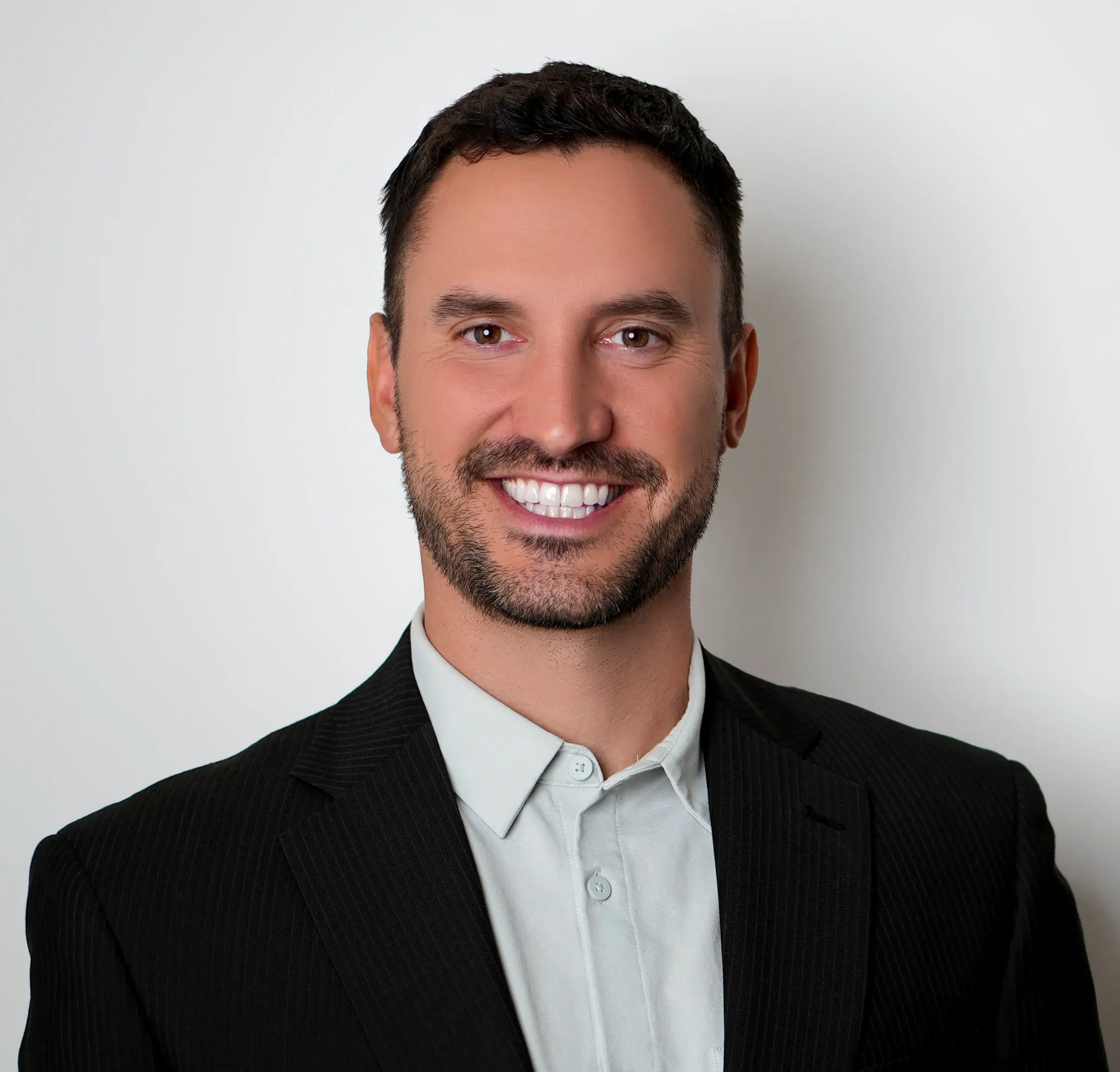
Rob, Founder of Public Adjusting Marketing
Rob is one of the country's top lead generation marketers by budget managed, directing $1,000,000 a month in SEO and $6,000,000 a month in advertising in personal injury, the most competitive market online, before building Public Adjusting Marketing exclusively for public adjusters. His approach is what brings in the larger loss claims: blending lead generation with a brand strategy that grows. Lead generation meets property owners in the moment they need help; the brand builds the trust that makes a seven figure client comfortable signing.
For large loss firms, that blend is the whole game. Lead generation puts your firm in front of the owner whose settlement will not cover the rebuild, and the brand strategy, the authority, the proof, and the name people recognize, turns that visit into a signed seven figure claim. Build both together and they compound every month, until you are not competing for claims but taking over your market.
Frequently Asked Questions About Large Loss Public Adjuster Marketing
What Is Large Loss Public Adjuster Marketing?
Large loss public adjuster marketing is the strategy of positioning a firm to win high value claims: home fires, commercial property damage, construction project losses, and business interruption. It differs from storm volume marketing because the buyer researches harder and the trust bar is higher, so it centers on proof: clear fee and process explanations, case studies, video success stories, and authority in Google and AI search.
What Counts as a Large Loss Claim in Public Adjusting?
A large loss claim generally means a six or seven figure property claim: a high value home fire, major water or structural damage to commercial buildings, a construction project damaged mid-build under a builder's risk policy, or a business interruption claim layered on physical damage. These claims involve complex policies and long fights, which is exactly where a public adjuster's expertise changes the outcome most.
How Do Public Adjusters Get Large Loss Claims?
Public adjusters get large loss claims through three channels working together: relationships with general contractors and referral networks who stand near the damage, digital authority that wins the research phase every large loss prospect goes through, and moment marketing that reaches owners when a settlement offer falls short of the rebuild cost. The firms that dominate work all three, because each channel reinforces the others.
Why Is Trust the Deciding Factor in Large Loss Claims?
Trust decides large loss claims because the client is handing a stranger a percentage of the largest financial recovery of their life. No one does that on a slogan. They do it when the fee structure is explained plainly, the process is clear, and real clients confirm on video that the firm delivered. A firm that proves trustworthiness before the first call wins against more experienced firms that never show proof.
What Should a Public Adjuster Website Show to Win Large Loss Claims?
A public adjuster website built for large losses shows four things fast: how the firm gets paid, in plain contingency terms; exactly what the firm does for the client, in a scannable process; proof, through video success stories, case studies, and reviews; and depth, through content that demonstrates command of fires, commercial claims, and construction losses. Most sites in this industry show none of the four.
Do Video Success Stories Really Help Public Adjusters?
Video success stories are the strongest trust asset a public adjuster can own. A real client explaining how the firm documented the loss, fought the carrier, and won the settlement proves everything the website claims, in a format that cannot be faked with templates. Three well-produced, well-placed video stories will outperform pages of text testimonials, and they double as content for social media, YouTube, and AI visibility.
How Do General Contractor Relationships Produce Large Loss Claims?
General contractors see construction damage and major property losses the day they happen, which makes them the most direct referral source for large loss claims. Building those relationships takes networking, but keeping them takes credibility: a GC refers the adjuster whose online presence makes the referral look smart. Strong success stories and a professional site turn one contractor relationship into a steady channel.
Can AI Search Bring Public Adjusters Large Loss Claims?
AI search is becoming a real source of large loss claims because high stakes prospects research harder than anyone else. Owners facing seven figure rebuilds ask ChatGPT and Google who can help, and the AI recommends firms it can verify through case studies, reviews, structured schema, and press coverage. The trust assets that convince a human prospect are the same signals that get a firm recommended by machines.
Why Is Hail Damage Marketing Different From Large Loss Marketing?
Hail damage marketing is a volume game: small claims, fast decisions, and competition from every roofer and storm chaser in the market, with fees compressed to match. Large loss marketing is a trust game: fewer claims, longer research, higher stakes, and a client who checks everything before calling. The two require different positioning, and firms that chase both usually end up owning neither.
How Long Does It Take to Build a Large Loss Marketing Presence?
Building a large loss marketing presence typically takes six to twelve months of consistent work: restructuring the website around fees, process, and proof, capturing the first video success stories, publishing authority content, and building the schema and citations that AI search reads. The trust assets compound permanently once built, which is why the firms that start now own the category in their market later.
Keep Reading: Related Guides
- How Do Public Adjusters Get Clients? Ten Channels Ranked by Claim Value: where large losses fit in the full channel map.
- How Public Adjusters Show Up in ChatGPT and AI Search: the machine side of the trust equation.
- Public Adjusting SEO: the service page for owning the searches large loss prospects make.
- Marketing Agency for Public Adjusters: the flagship guide to what a specialist agency should build for your firm.
The Bottom Line
Large loss public adjuster marketing comes down to one sentence: nobody hands over a seven figure claim on "trust me." The claims come from contractors, from digital authority, and from the moment the settlement is not enough to rebuild, and every channel runs on the same fuel: a fee structure explained plainly, a process a stressed owner can absorb in thirty seconds, and real clients proving it all on video. The industry has left that trust factor unbuilt, which makes it the single biggest opening in public adjusting today.
Public Adjusting Marketing builds that trust factor for public adjusters and nobody else, and large loss positioning is at the center of everything we do. Tell us your story.